• Experience

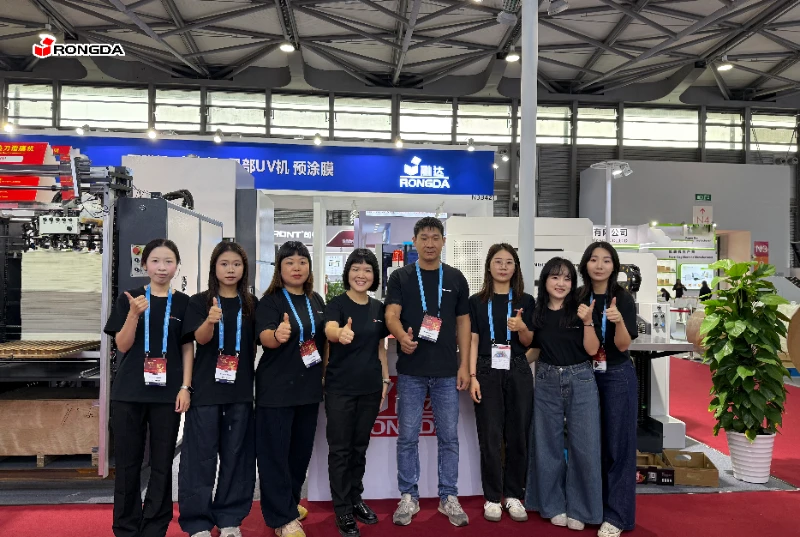
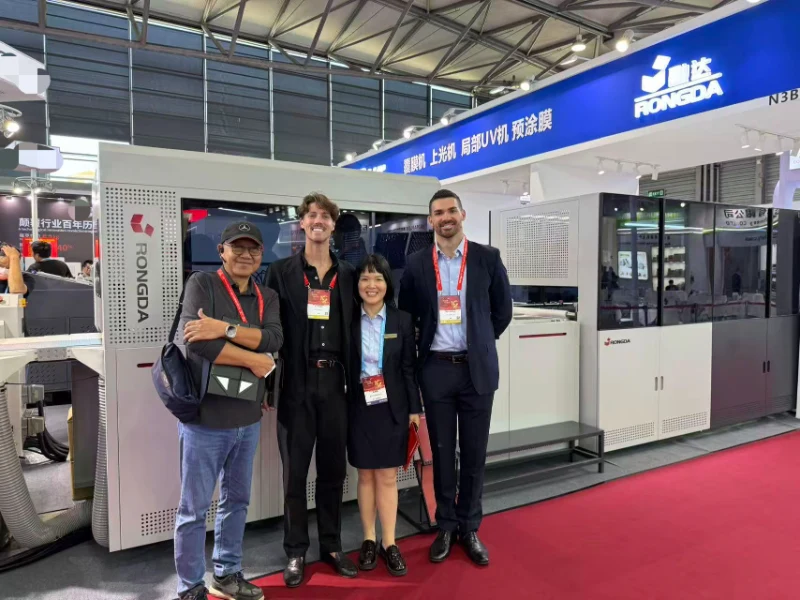
    5 years of deep development in the industry

  • Company

    The factory covers an area of approximately 10000 square meters

  • Certificate

    Team of 100 people, more than 20 cutting-edge achievements

  • Service

    We provide 24-hour online consultation and technical support

Product Category

Discover Rongda's CE-Certified Packaging Machinery: Custom Rigid Box Makers, Case Formers & Cardboard Solutions - In Stock & Ready for Global Dispatch.
  • Rigid Box Making Machine
    Rigid Box Making Machine

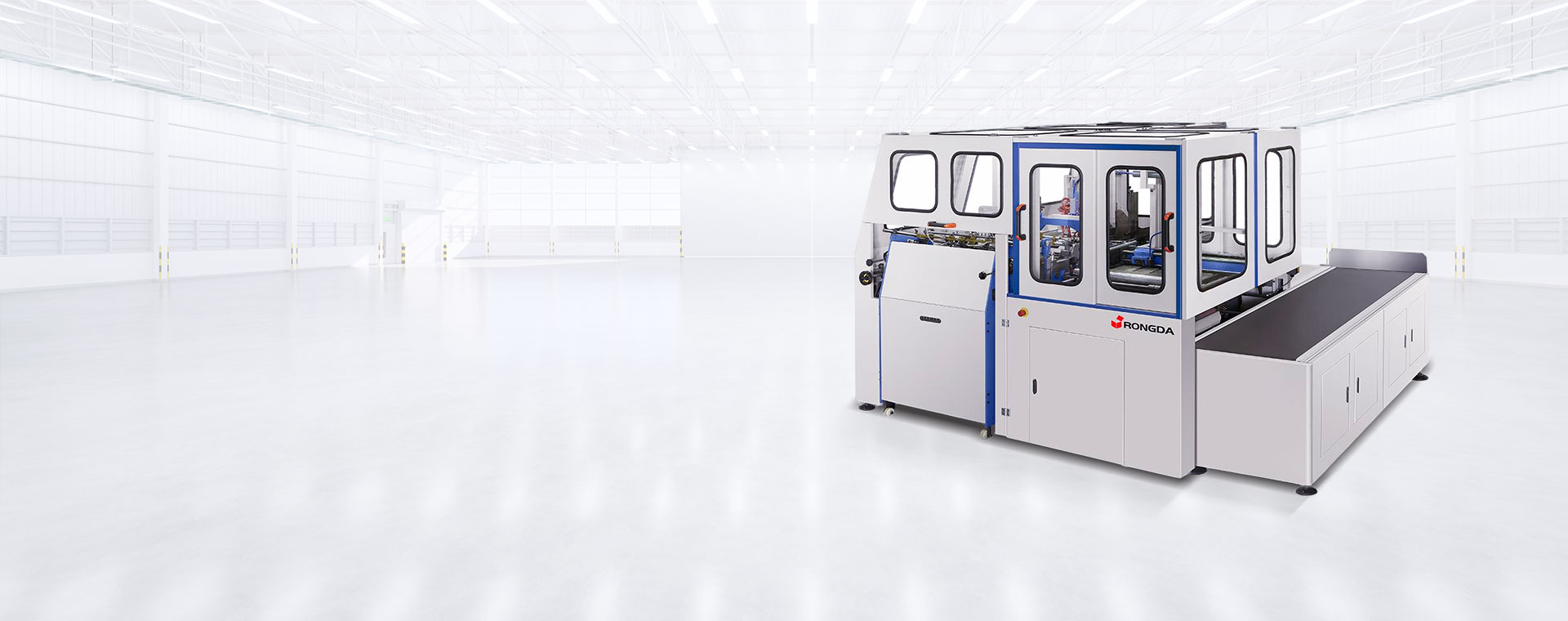
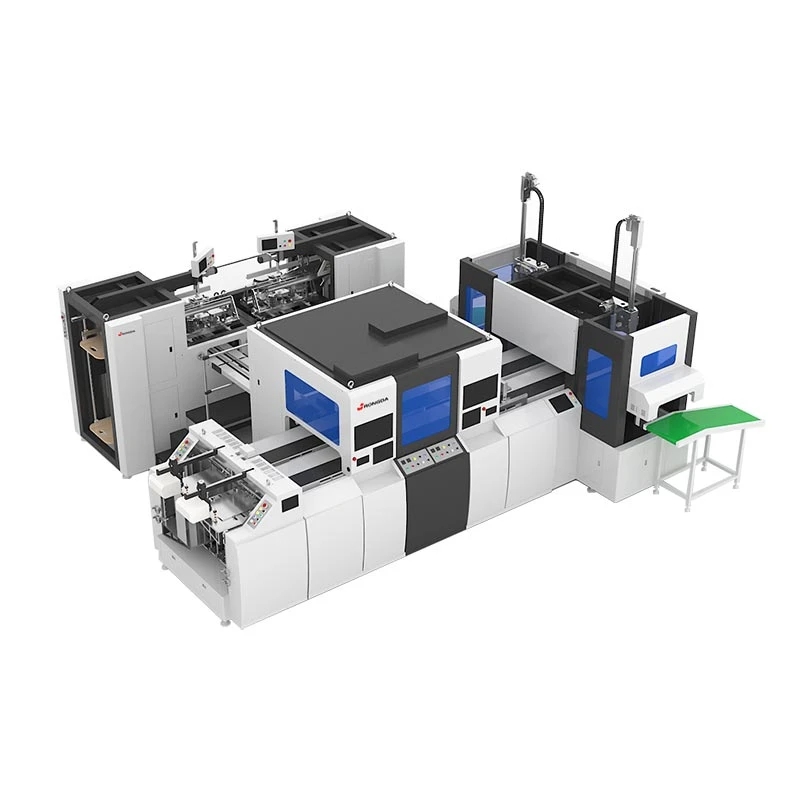
    Rongda is a professional manufacturer and supplier of rigid box making machines. If you want to improve and scale up the mass production of high-end gift boxes and premium packaging, you can choose to cooperate with us to obtain equipment that delivers both high quality, efficiency, and yield.


    Product Features

    1. High-Precision Forming

    The Rigid Box Making Machine utilizes a precision transmission structure and a stable control system, ensuring high consistency in key processes such as paper lamination, positioning, edge wrapping, and forming. This avoids problems such as crooked boxes, wrinkles, glue overflow, and dimensional deviations, making it suitable for the production of high-end gift boxes and premium packaging with extremely high appearance requirements.

    2. High Degree of Automation

    Among our equipment categories, there are fully automatic models that integrate automatic paper feeding, automatic positioning, automatic edge wrapping, and automatic forming, significantly reducing manual intervention and human error. Even new operators can quickly get started.

    3. High Production Efficiency

    The equipment can operate continuously and stably, supporting mass production. Compared to manual box making methods, it can significantly increase output per unit of time, shorten delivery times, and help you secure more high-end and export orders.

    4. Strong Specification Adaptability

    The Rigid Box Making Machine can adapt to rigid boxes of different sizes, thicknesses, and structures, suitable for various high-end packaging scenarios such as mobile phone boxes, jewelry boxes, cosmetic boxes, wine boxes, tea boxes, and gift boxes.  There is no risk of equipment limitations due to changes in processed products.

    5. High Yield Rate

    Through a stable structure and precise control, the first-pass yield rate is improved, reducing rework, waste, and material waste, saving money in the long run.

    6. Easy Maintenance

    Rongda's equipment features a reasonable overall layout, clear maintenance points, and mature selection of core components, suitable for long-term industrial operation, reducing downtime and protecting your delivery stability.


    Rigid Box Making Machine


    Rigid Box Making Machines: Semi-automatic vs. Fully Automatic, How to Choose?

    Semi-automatic rigid box making machine Fully automatic rigid box making machine
    Level of automation Manual paper feeding/positioning + machine forming Automatic feeding, automatic positioning, automatic edge banding, automatic forming.
    Initial investment The cost is relatively low, making it suitable for initial testing or early-stage upgrades. The cost is relatively high, but it represents a long-term investment in equipment.
    Labor requirements Several skilled workers are needed to collaborate on this task. The number of human workers has decreased significantly, resulting in low dependence on manual labor.
    Production efficiency Medium, heavily influenced by worker skill level. High efficiency, continuous and stable operation.
    Product consistency Easily influenced by human factors, and subject to fluctuations. High consistency, suitable for brand-level orders.
    Yield rate Medium High quality, low defect rate.
    Flexibility in changing specifications High, suitable for multiple varieties and small batches. Medium to high, suitable for standardized bulk orders.
    Types of factories suitable for Startup factory / Small-batch custom manufacturing factory Established factory / Export-oriented / Supplier for branded products
    Typical applications Gift boxes, small-batch premium boxes Large-scale production of electronics boxes, cosmetics boxes, and wine boxes.


    Both types of equipment have their advantages, and it is recommended to choose the one that best suits your needs.

    If you are testing the rigid box market or primarily handling small, customized orders → a semi-automatic machine is more suitable.

    If you have stable orders, high labor costs, or plan to expand your scale → a fully automatic machine is the better solution.


    Processing Capabilities

    Lid and Base Boxes: This is the most common high-end packaging structure, widely used for electronic products, gift boxes, jewelry boxes, tea boxes, etc., and is also within the processing capabilities of our Rigid Box Making Machine.

    Book-style Boxes / Flip-top Magnetic Closure Boxes: These boxes are suitable for branded and gift packaging, offering a high-end appearance and strong added value.

    Drawer Boxes: Commonly used for jewelry, cosmetics, cultural and creative products, and board game packaging.

    Foldable High-end Gift Boxes: High-quality texture, easy to control transportation and storage costs, suitable for export and e-commerce.

    Multi-piece Combination Boxes: Gift box sets, wine combination packaging, cosmetic set packaging.


    Rigid Box Making Machine


    Why Choose Us?

    If you are upgrading your rigid box production line, please contact us. Tell us your box type, specifications, and production capacity targets, and Rongda will provide you with the most suitable and cost-effective rigid box making solution.

    Backed by over 20 years of industry experience and project experience covering more than 60 countries and regions worldwide, Rongda's rigid box making machines have been continuously tested in real customer projects. They consistently serve high-end packaging industries such as electronics, jewelry, cosmetics, and alcoholic beverages, helping factories reduce reliance on manual labor, improve product consistency, and build a sustainable and scalable production system.From initial selection and evaluation, sample testing, to production follow-up, factory acceptance testing, overseas installation, and lifelong technical support, Rongda has established a mature, replicable, and practical service system to ensure that every piece of equipment is truly integrated into the customer's factory, not just delivered. We look forward to establishing long-term partnerships with packaging manufacturers worldwide, not just completing a single equipment purchase, but jointly promoting the upgrade of high-end packaging production capacity.


    Rigid Box Making Machine


  • Case Maker
    Case Maker

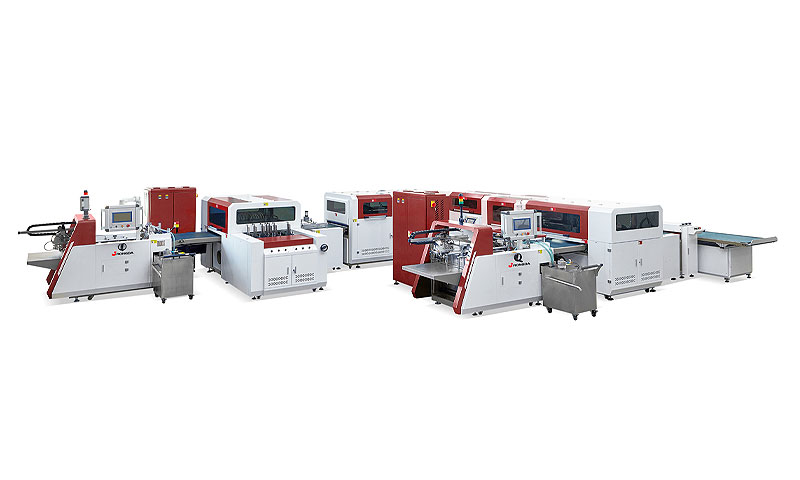
    If you are looking for a reliable case maker manufacturer that provides efficient solutions for high-end book, record, gift, and creative packaging, then look no further than Rongda. Our equipment utilizes precise paper lamination, edge wrapping, corner pressing, and forming processes, resulting in high consistency and exquisite surface finish. This helps you establish a standardized, stable, and efficient cover production process. With our professional design, mature technology, and global service system, we have become a long-term partner supplier in many countries and regions worldwide, providing customized equipment solutions.


    What is a Case Maker?

    The Case Maker is a core front-end equipment in high-end rigid box and hardcover book packaging production lines, primarily used for manufacturing various cover components. It combines the cover paper with the grey board, wraps the edges, presses the corners, and performs initial shaping, producing cover components that can be directly used for the assembly of complete boxes or book covers.

    Unlike our other type of equipment, the Rigid Box Making Machine, the Case Maker focuses on the precision and appearance of the cover components, ensuring a flat surface, sharp corners, and tight paper adhesion, significantly improving the yield and visual quality of the covers.


    Case Maker


    Equipment Core Value

    ✔ Elevate Product Quality

    Case Maker, through precise paper lamination, edge wrapping, corner pressing, and initial shaping processes, produces cover components with flat surfaces, sharp edges, and tightly bonded paper.

    For hardcover book covers, record sleeves, book boxes, and especially high-end gift and cultural and creative product packaging, this high-end brand visual and tactile standard is crucial, helping you increase product added value and market competitiveness.

    ✔ Improve Production Efficiency

    Traditional cover production relies heavily on manual labor, resulting in low efficiency and susceptibility to variations in skill levels. With Case Maker, you can choose the semi-automatic or fully automatic model that best suits your needs, enabling large-scale continuous operation or flexible production, reducing reliance on skilled workers, and maintaining your factory's production rhythm.

    ✔ Guarantee High Yield Rate

    Due to our equipment's mature process design and high-precision mechanical structure, the final products have a high yield rate. Stable operation reduces rework and paper waste, supporting you in completing large-volume orders on time.

    ✔ Adapt to Multi-Specification Production

    Supports various gray board thicknesses and cover paper materials, adapting to the production of covers of different sizes and structures.

    By adjusting tooling or parameters, you can quickly switch specifications, enabling multi-variety, small-batch orders and large-volume standardized production.


    Case Maker


    Maintenance Guide

    1. Daily Cleaning

    Machine surface and feeding track: Clean dust and paper scraps after each day's production to prevent accumulation from affecting feeding accuracy.

    Rollers, pressure rollers, and laminating components: Regularly wipe away adhesive residue to prevent paper sticking or uneven lamination.

    Electrical control panel and sensors: Gently wipe with a clean, dry cloth to prevent moisture ingress.

    2. Lubrication and Maintenance

    Moving parts: Apply appropriate lubricating oil to chains, gears, bearings, etc., according to usage frequency.

    Corner pressing and edge wrapping devices: Check if bearings and sliding surfaces are dry; apply a small amount of high-temperature grease if necessary.

    3. Inspection and Adjustment

    Adhesive system: Regularly check the amount of adhesive and the cleanliness of the adhesive rollers to prevent leakage or insecure lamination.

    Positioning and corner pressing devices: It is recommended to perform accuracy calibration monthly or quarterly to ensure consistent cover dimensions and precise corners.

    Feeding system: Ensure that the feeding wheels and guide rails are not loose or worn to prevent paper jams or misalignment.

    4. Regular Maintenance

    Comprehensive inspection: As the manufacturer of the Case Maker, Rongda recommends professional maintenance every 6 months, including inspection of the electrical system, pneumatic system, transmission device, and safety devices.

    Replacement of wear parts: Please replace wear parts such as adhesive rollers, rollers, belts, and sensors in a timely manner according to their wear condition.

    Software/Control system: For the automated control system, system upgrades or parameter optimization can be performed.

    5. Operator Training

    Operators should be familiar with equipment usage specifications, start-up/shutdown procedures, emergency stop operations, and simple troubleshooting. If simple troubleshooting cannot identify the problem, please contact us immediately for relevant services.

    Regular training and review should be conducted, and daily maintenance should be properly performed to reduce equipment damage caused by human error.

  • Cardboard Processing Machine
    Cardboard Processing Machine

    As a packaging equipment solutions provider from China, Rongda can offer you highly efficient cardboard processing machines. These are not just single machines, but a comprehensive range of key equipment including automatic cardboard cutting machines, cardboard corner cutters, and cardboard slotting machines.

    Through a variety of automated and semi-automated models, these cardboard processing machines significantly improve production efficiency, reduce reliance on manual labor, and ensure high product quality and batch consistency, helping factories handle diverse and large-volume orders.


    Core Processes

    The Cardboard Processing Machine is a key upstream equipment in the production line of rigid boxes, book boxes, and high-end gift packaging. It precisely processes cardboard, laying the foundation for subsequent processes. As we just mentioned, it doesn't just include one type of equipment; different categories represent different processes.

    1. Automatic Cardboard Cutting

    Function: Quickly and accurately cuts raw greyboard or cardboard into the required sizes according to the design specifications.

    Application: Suitable for cutting standard board materials for various rigid boxes, book boxes, and gift boxes.


    2. Cardboard Corner Cutting

    Function: Precisely trims the corners of the cardboard to create folded or rounded corners.

    Application: Used in scenarios requiring precise corner processing for high-end book boxes, gift boxes, and hardcover packaging.

    3. Cardboard Grooving

    Function: Creates fold lines or grooves on the cardboard, making the material easier to fold and shape.

    Application: Suitable for the production of rigid boxes, book boxes, and nested boxes of various sizes and thicknesses.


    Cardboard Processing Machine


    How Does the Cardboard Processing Machine Integrate with Other Equipment?

    The Cardboard Processing Machine needs to be used in conjunction with subsequent equipment during the finished product processing stage, forming a complete and efficient high-end packaging production line. Rongda is a supplier that can provide you with a complete set of solutions.

    1. Integration with Case Maker

    The processed cardboard sheets can be directly fed into the Case Maker for lamination, edge wrapping, and cover forming.

    Advantages: Ensures precise cover dimensions and cardboard folding lines, reduces debugging time for the cover machine, and improves the consistency of finished covers.

    Typical applications: Hardcover book covers, record sleeves, high-end gift box covers.

    2. Integration with Rigid Box Making Machine

    The cardboard sheets, after processing and cover treatment, can be fed into the Rigid Box Making Machine for complete box assembly and forming.

    Advantages: Ensures precise box dimensions and neat corners, reduces rework rate in box production, and improves productivity and yield.

    Typical applications: Finished production of rigid boxes, book boxes, and gift boxes.

    3. Integration with post-processing decoration and automated auxiliary equipment

    The cardboard processing machine can also be combined with post-processing decoration equipment such as laminating machines and hot stamping machines to complete the surface process of high-end packaging.

    Alternatively, it can be combined with auxiliary equipment such as automatic feeders, conveyor lines, and stacking machines to achieve automated and continuous operation of the entire production line, reducing manual intervention.


    Cardboard Processing Machine


    FAQ

    Q: What is the difference between automatic and semi-automatic cardboard processing machines?

    A: Semi-automatic: Manual board placement, machine cutting, corner cutting, and grooving. Suitable for multi-variety, small-batch production.

    Fully automatic: Automatic feeding, positioning, cutting, and grooving. Suitable for large-volume, high-stability production, with higher efficiency and lower reliance on manual labor.


    Q: How to maintain a Cardboard Processing Machine?

    A: Clean paper scraps and dust daily;

    Lubricate moving parts, bearings, and transmission mechanisms regularly;

    Check the wear of rubber wheels, rollers, belts, and cutting tools;

    Perform a comprehensive professional maintenance every 6 months;

    Cooperate with the operation training and after-sales guidance provided by Rongda to ensure the long-term stable operation of the equipment.


    Q: Can it be customized according to factory needs?

    A: Yes. Rongda is a professional packaging equipment factory and can provide customized cardboard processing machines or complete line solutions based on customer's cardboard size, thickness, production capacity targets, and automation level.

  • Laminating Machine
    Laminating Machine

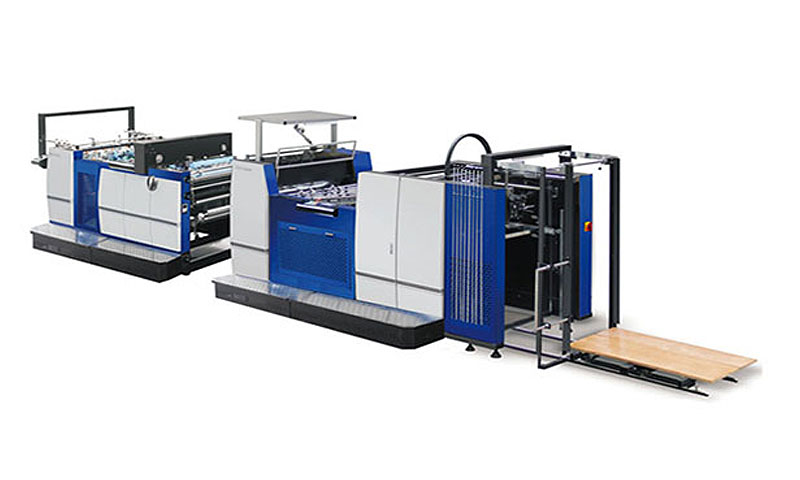
    Laminating machines are another type of machinery that Rongda Packaging can provide. Choose us as your manufacturer and supplier to find the packaging machinery that suits your production needs and create a complete solution. This series of equipment can precisely laminate film or facing paper with paper or cardboard, enhancing the texture, protective performance, and overall quality of the packaging surface.


    How Does a Laminating Machine Work?

    The working process of a laminating machine is directly related to the conveying system, laminating system, and control system. Through precise control, it stably and accurately bonds film or facing paper to paper or cardboard. In this series, we mainly offer two types: Film Laminating Machines and Cardboard Laminating Machines. While there are differences between the two, the core working process is highly consistent.

    1. Automatic Feeding and Positioning

    The equipment first feeds the facing paper, cardboard, or film into the working area through an automatic feeding system. Sensors and positioning devices ensure that the material enters smoothly and maintains continuous and stable feeding.

    2. Lamination Preparation

    Film Laminating Machine: The film surface is brought to a laminable state through a heating or adhesive application system.

    Cardboard Laminating Machine: Adhesive is evenly applied to the surface of the paper or cardboard, ensuring consistent adhesive thickness with no clumping or gaps.

    This step is crucial and directly determines the bonding strength and the flatness of the finished product.

    3. Alignment and Pressing

    After the materials enter the laminating area, precise alignment is achieved through a synchronous conveying and correction system. Then, high-precision pressure rollers or pressing mechanisms provide stable pressure to firmly bond the film or facing paper to the substrate and remove air bubbles.

    4. Cooling, Shaping, and Output

    After lamination is complete, the material passes through a cooling and shaping system, allowing the adhesive layer or film to stabilize.  It is then automatically output for subsequent processes.


    Laminating Machine


    What Types of Products Can a Laminating Machine Process?

    1. High-End Commercial Packaging

    This is a very intensive application area for laminating machines. Lamination can enhance brand value and packaging durability.

    Rigid boxes and gift boxes: Mobile phone boxes, jewelry boxes, high-end wine boxes, cosmetics and perfume boxes.

    Luxury shopping bags: Paper shopping bags for high-end retail brands; lamination improves tear resistance and weight-bearing capacity at the handles.

    Folding cartons: Pharmaceutical packaging boxes, health product boxes, and high-end electronic product packaging.

    2. Publications and Printed Materials

    Used to protect printed images and text from wear and tear, and can also enhance the tactile feel.

    Book and magazine covers: Hardcover book covers, textbooks, magazine covers.

    Promotional materials: High-end brochures, leaflets, company profiles, product manuals, posters.

    Business cards and cards: Business cards, postcards, greeting cards.

    Restaurant menus: Utilizing the waterproof and oil-resistant properties of lamination to extend the lifespan of menus under frequent use.

    3. Labels and Office Supplies

    Self-adhesive labels: Wine labels, daily chemical product labels; lamination prevents ink from smudging due to moisture or being corroded by chemicals.

    Office stationery: Folders, notebook covers, calendars, maps.

    Identification documents: Work permits, student IDs, various card laminations.

    4. Industrial and Special Applications

    Industrial-grade laminating machines can handle more complex materials.

    Flexible packaging: Food bags, aluminum foil composite packaging.

    Building and industrial materials: Floor laminates, insulation board lamination, surface covering films for automotive interior parts.

    Electronic/medical protection: Medical equipment packaging, anti-static protective packaging for precision electronic components.


    FAQ

    Q: What special film materials does the machine support? For example, soft-touch film or anti-scratch film?

    A: Rongda's high-end laminating machines feature precise pressure and temperature control systems, perfectly compatible with:

    Soft Touch Film: Gives packaging a velvety texture.

    Anti-scratch Film: Prevents scratches on dark printed materials during transportation.

    Holographic Film: Adds anti-counterfeiting features and visual appeal.

    Our machines can reliably process all mainstream BOPP, PET, and special functional films available on the market.


    Laminating Machine


    Q: Will the lamination peel off after die-cutting or hot stamping?

    A: This depends on the pressure and adhesive penetration during the lamination process. Our machines are equipped with large-diameter steel rollers and a high-pressure hydraulic system, which generate strong bonding pressure.

    As long as the appropriate temperature is set, the film and paper will form a secure bond, and subsequent high-intensity die-cutting, folding, or hot stamping processes will not cause peeling or delamination.

  • Die Cutting Machine
    Die Cutting Machine

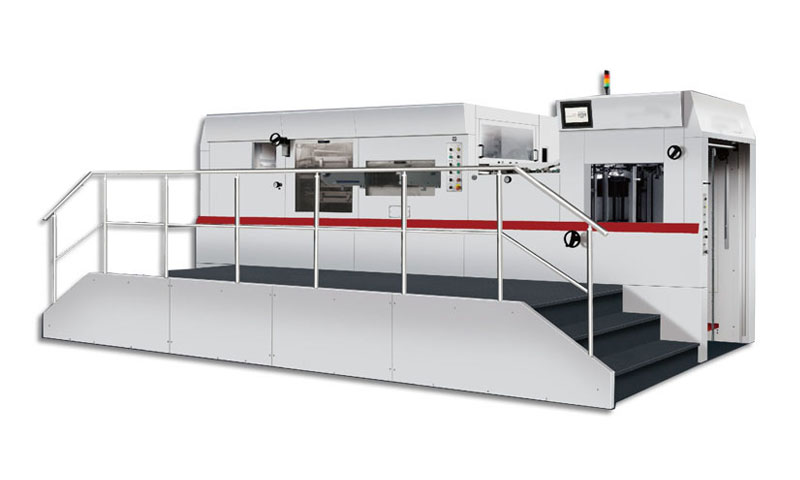
    Rongda is a China Die Cutting Machine Supplier, and we can also offer many other types of packaging machines, including rigid box making machine, case maker, laminating machine, etc.

    In the post-printing packaging equipment system, Die Cutting Machine is a type of core equipment used for cutting, indenting and structural forming of printed or unprinted materials. It uses pre-made die molds to precisely process paper, cardstock, grayboard paper, corrugated paper, etc., converting flat printed products into packaging structure components with folding and assembly functions.

    For packaging products such as color boxes, premium boxes, book-shaped boxes, and lid-type boxes, the die-cutting process directly determines the accuracy of the packaging structure, the consistency of the shape, and the efficiency of subsequent assembly.


    Die Cutting Machine


    Die Cutting Machine


    What Role Does the Die-Cutting Machine Play in the Post-Printing Packaging Process?

    In the complete post-printing packaging production process, the die-cutting machine usually occupies a crucial position that links the upper and lower stages:

    Printing → Surface treatment (coating / varnishing / gold stamping) → Die-cutting → Filled box / Assembly → Finished packaging

    The stability of die-cutting quality directly affects:

    Is the packaging lid functioning smoothly?

    • Is the line graph accurate?

    • Is the finished product stiff?

    The die cutter plays a crucial role in the packaging production process, and its core value lies in significantly reducing the proportion of waste and rework. As a result, it has gone beyond the category of a mere “cutting tool” to become a pillar of equipment that determines the efficiency of the entire line and the quality of the final product.


    So What Core Processing Tasks Are Precisely Responsible for the Milling Machine?

    A professional packaging die-cutting machine can usually integrate the following multiple processing requirements:

    Forming die-cutting: Achieving precise cutting of the packaging outline

    Indentation line: Ensure accurate subsequent folding and shaping

    Opening windows / Making holes: Meeting the requirements for display or functional design

    Embossing / Debossing: Enhancing the three-dimensionality and added value of packaging

    These processes usually need to be completed in a single die-cutting operation, which places high demands on the precision of the equipment, pressure control and stability.


    Die Cutting Machine


    Die Cutting Machine


    What Are the Common Types of Die-Cutting Machines? How Can They Be Matched to Different Production Requirements?

    Flat pressure flat die-cutting machine

    • Widely applied in the industry

    • High die-cutting accuracy and strong adaptability

    • Suitable for color boxes, premium boxes, and products requiring high-quality packaging.

    Semi-automatic die-cutting machine

    • Take into account both cost and efficiency

    • Suitable for small and medium-sized packaging enterprises or multi-product production models

    Fully automatic die-cutting machine

    • Automatic feeding, die-cutting, and waste removal

    • Applicable to large-scale and high-end packaging production lines


    How to Select the Die-Cutting Machine That Suits Your Production Line?

    This is one of the most frequently discussed issues for packaging enterprises when purchasing equipment. During the selection process, several key aspects usually need to be given special attention:

    • Type of processing material and maximum size

    • Product complexity and die-cutting accuracy requirements

    • Daily production capacity and order stability

    • Whether automatic waste removal and online production are required

    • The compatibility with the preceding and subsequent equipment (printing machine, die-cutting machine)

    Different packaging enterprises with different positioning have significant differences in their demands for die-cutting machines. Reasonable machine selection not only affects production efficiency but also relates to long-term operating costs.


    In Which Packaging Fields Is the Die-Cutting Machine Mainly Applied?

    • Color box packaging

    • Premium gift box and fine box

    • Book-shaped box, lid-type cover, hard box structure

    • Display packaging and functional packaging

    • Labels, cards and special paper products


    Why Is the Die-Cutting Machine Regarded as the "Core Equipment" Among Post-Printing Packaging Devices?

    From an industry perspective, the die-cutting machine plays a crucial role in converting design drawings into producible packaging structures. Its stability, precision and automation level directly determine whether the packaged products possess consistency, assemblyability and commercial value.

    For packaging enterprises that value quality and efficiency, choosing the right die-cutting machine is a crucial step in enhancing their overall competitiveness.

  • Hot Stamping Machine
    Hot Stamping Machine

    Looking for a highly efficient hot stamping machine supplier?  Consider partnering with Rongda. We not only supply hot stamping machines but also offer a variety of other equipment, including rigid box making machines, laminating machines, and die-cutting machines, providing you with a comprehensive range of packaging processing solutions.


    What Processes Are Supported by the Hot Stamping Machine?

    1. Traditional Flat Hot Stamping

    Principle: A heated die transfers metal foil or color film onto the surface of paper, plastic, or leather.

    Application: Common gold/silver logos and text. It produces a very high metallic luster, unmatched by ink printing.

    2. Embossed/Debossed Hot Stamping

    Principle: Using special male and female dies, embossing is performed simultaneously with hot stamping.

    Effect: In addition to metallic luster, it has a distinct tactile relief.

    3. Holographic Anti-Counterfeiting Hot Stamping

    Principle: A laser film with a holographic anti-counterfeiting pattern is hot stamped onto the product.

    Application: Commonly used in pharmaceutical packaging, high-end wine labels, certificates, and bank cards, increasing product brand protection.

    4. Embossing/Debossing

    Principle: Without loading the hot stamping foil, the hot stamping machine uses a heated die to directly apply pressure to the paper.

    Effect: Produces a purely physical textured feel, suitable for minimalist style high-end business cards, paper bags, or gift box surfaces.

    5. Laser/Refractive Hot Stamping

    Principle: Using a die with extremely fine textures, a refractive effect is pressed out simultaneously with hot stamping.

    Effect: At different angles, the gold part will show a dynamic visual effect of flowing light and color, which is very suitable for enhancing the uniqueness of the packaging.


    Hot Stamping Machine


    Process Recommendations for Different Materials

    Based on Rongda's practical application experience, the performance of the hot stamping machine varies on different substrates:

    Paper/Cardboard: Supports all the above processes, and is the perfect carrier.

    Leather/PU: Deep flat hot stamping is commonly used, requiring a longer pressure holding time to embed the gold foil into the texture.

    Plastic/PVC: Requires specific temperature rollers or dies to prevent material deformation due to heat.

    Wood/Fabric: Suitable for flat hot stamping, commonly used for high-end wooden wine boxes or fabric gift boxes.


    Hot Stamping Machine


    Common Problems and Solutions When Using Hot Stamping Machines

    1. Poor or incomplete hot stamping/foil detachment: The foil does not transfer completely to the substrate, or it peels off easily with a light touch.

    Cause analysis and solutions:

    Temperature too low: The hot-melt adhesive of the foil is not fully melted. → Gradually increase the hot stamping temperature.

    Insufficient pressure: Insufficient pressure is applied between the foil and the substrate. → Increase hydraulic pressure or adjust the thickness of the padding.

    Poor substrate compatibility: The paper surface has too much ink, contains powder, or has silicone oil components. → Replace with special foil suitable for specific inks or papers.


    2. Blurred or thickened hot stamping/text: Small text or patterns stick together, and the edges are unclear.

    Cause analysis and solutions:

    Temperature too high: Causes the color layer of the foil to melt and spread beyond the pattern edges. → Lower the hot stamping temperature.

    Excessive pressure: Causes the foil to be squeezed and deformed. → Reduce the pressure; the mold should only apply pressure to the pattern area.

    Insufficient foil tension:  Delayed winding leads to overlapping. → Adjust the foil tension system to ensure smooth and tight foil movement.


    3. Fuzzy or pitted hot stamping patterns: The pattern edges are uneven, or small white spots appear in the middle of the pattern.

    Cause analysis and solutions:

    The hot stamping plate surface is dirty or damaged. → Clean the hot stamping plate surface with a soft cloth.

    The paper surface is too rough or has too much dust. → Clean the environment to ensure the paper is clean.

    Uneven pressure. → Apply localized pressure to ensure balanced force.


    4. Loss of metallic luster in the pattern: The stamped gold appears dull, dark, or even discolored.

    Cause analysis and solutions:

    Temperature too high: The foil is overheated, causing oxidation or structural damage to the metal layer. → Lower the working temperature and find a balance point within the recommended range.

    Unstable hot stamping plate temperature: The fluctuation range is too large. → Check if the heating element is aging and calibrate the accuracy of the temperature control sensor.


    5. Foil breakage or winding problems: The foil breaks frequently during production, or the foil sticks to the substrate after stamping and cannot be pulled.

    Cause analysis and solutions:

    Incorrect step setting, step distance is too short. → Reset the step control parameters, leaving a reasonable margin.

    The peeling time after hot stamping is too late. → Fine-tune the position of the stripping plate to ensure the gold foil separates quickly after hot stamping.

About Us

Wenzhou Rongda Packaging Equipment Co., Ltd.

Since its establishment in 2021, Wenzhou Rongda Packaging Equipment Co., Ltd. has rapidly grown into a highly regarded provider of high-end solutions in the post-press packaging equipment sector. With operations in over 60 countries and regions worldwide, the company leverages its extensive experience and professional service to provide customers with high-quality packaging production equipment from design to finished product.
Our product line comprehensively covers multiple key processes, including rigid box production, case maker, printing, UV coating, laminating, hot stamping, embossing, die-cutting, cardboard grooving, gluing, robotic intelligent positioning, forming, efficient assembly, and final packaging, forming a complete integrated equipment ecosystem.
About Us

Provide you with the most suitable Premium Packaging production line

Rongda - Highly Regarded Provider of High-end Solutions in The Post-press Packaging Equipment Sector
2021

Was Established In

10000

Factory Area

100 +

More Than 100 Products

80

Export Countries

Send Inquiry

Get Instant Quotation on Durable Rongda Equipment: Factory-Direct Pricing with 1-Year Warranty. Custom Solutions in 24h!

News

Rongda Industry Updates: Latest Packaging Tech Innovations & Exhibition Insights from Our Professional Manufacturing Hub.

Happy Chinese New Year

Happy Chinese New Year

This past year, our most cherished memories are the encounters we had with you at various exhibitions. The sparks of exchange and collaboration not only showed us your attention but also fostered mutual growth. We cherish every moment and remember each scene fondly.

Working Principle of Automatic Cardboard Processing Machine

Working Principle of Automatic Cardboard Processing Machine

The working principle of an automatic cardboard processing machine is mainly based on the coordinated operation of a servo control system and high-precision sensors. It automatically senses material tension and adjusts cutting parameters in real time to ensure cutting accuracy.

What Is a Semi-auto Ribbon Pasting Machine and Why Is It Essential for Modern Packaging?

What Is a Semi-auto Ribbon Pasting Machine and Why Is It Essential for Modern Packaging?

In today’s competitive packaging industry, manufacturers are under constant pressure to improve efficiency, reduce labor costs, and maintain consistent product quality. A Semi-auto Ribbon Pasting Machine provides an effective solution for ribbon application on gift boxes, cosmetic packaging, luxury paper bags, and rigid cartons. This comprehensive guide explores how the machine works, its advantages, technical structure, use cases, comparison with manual and fully automatic systems, ROI considerations, maintenance tips, and frequently asked questions.

Why Should You Invest in a Cardboard Grooving Machine?

Why Should You Invest in a Cardboard Grooving Machine?

In today's fast-paced packaging industry, efficiency and precision are more important than ever. Cardboard grooving machines have revolutionized the way manufacturers produce corrugated boxes and cardboard products. This article explores why investing in a high-quality cardboard grooving machine can solve production challenges, enhance product quality, and increase profitability. We also discuss features, benefits, types, and maintenance tips to help you make an informed decision.

How Can a Semi-auto Case Maker Transform Your Packaging Production?

How Can a Semi-auto Case Maker Transform Your Packaging Production?

In today’s competitive manufacturing and logistics environments, packaging efficiency directly influences product protection, shipping reliability, and operational profitability. Businesses that produce rigid boxes, hardcover book cases, presentation folders, and luxury packaging often face challenges such as inconsistent manual production, labor-intensive workflows, and rising operational costs. A Semi-auto Case Maker offers a practical balance between automation and control, allowing manufacturers to enhance output quality without the complexity of full automation systems.

How Rigid Box Assembly Machine Transforms Premium Packaging Production?

How Rigid Box Assembly Machine Transforms Premium Packaging Production?

​In today’s competitive packaging market, brands are no longer satisfied with simple protection for their products. They want packaging that communicates value, precision, and consistency. This is where the rigid box assembly machine becomes a critical investment for manufacturers producing luxury gift boxes, electronics packaging, cosmetics boxes, and high-end retail cartons. Many factories struggle with unstable quality, high labor costs, slow output, and difficulty scaling production. A well-designed rigid box assembly machine directly addresses these challenges by combining accuracy, efficiency, and repeatability into a single automated solution.

What Is an Automatic Rigid Box Making Machine?

What Is an Automatic Rigid Box Making Machine?

An Automatic Rigid Box Making Machine is a high-efficiency packaging solution designed for producing premium rigid boxes with precision, consistency, and reduced labor dependency. These machines are widely used in luxury packaging industries such as cosmetics, electronics, jewelry, watches, gift boxes, and high-end consumer goods. This in-depth guide explains how automatic rigid box making machines work, the real problems they solve for manufacturers, key features to look for, production workflows, cost considerations, and why choosing a trusted manufacturer like Wenzhou Rongda Packaging Equipment Co., Ltd. can significantly impact long-term business success.