English
- English
- Español
- Português
- русский
- Français
- 日本語
- Deutsch
- tiếng Việt
- Italiano
- Nederlands
- ภาษาไทย
- Polski
- 한국어
- Svenska
- magyar
- Malay
- বাংলা ভাষার
- Dansk
- Suomi
- हिन्दी
- Pilipino
- Türkçe
- Gaeilge
- العربية
- Indonesia
- Norsk
- تمل
- český
- ελληνικά
- український
- Javanese
- فارسی
- தமிழ்
- తెలుగు
- नेपाली
- Burmese
- български
- ລາວ
- Latine
- Қазақша
- Euskal
- Azərbaycan
- Slovenský jazyk
- Македонски
- Lietuvos
- Eesti Keel
- Română
- Slovenski
- मराठी
- Srpski језик

Reliable Case Maker Manufacturer and Supplier
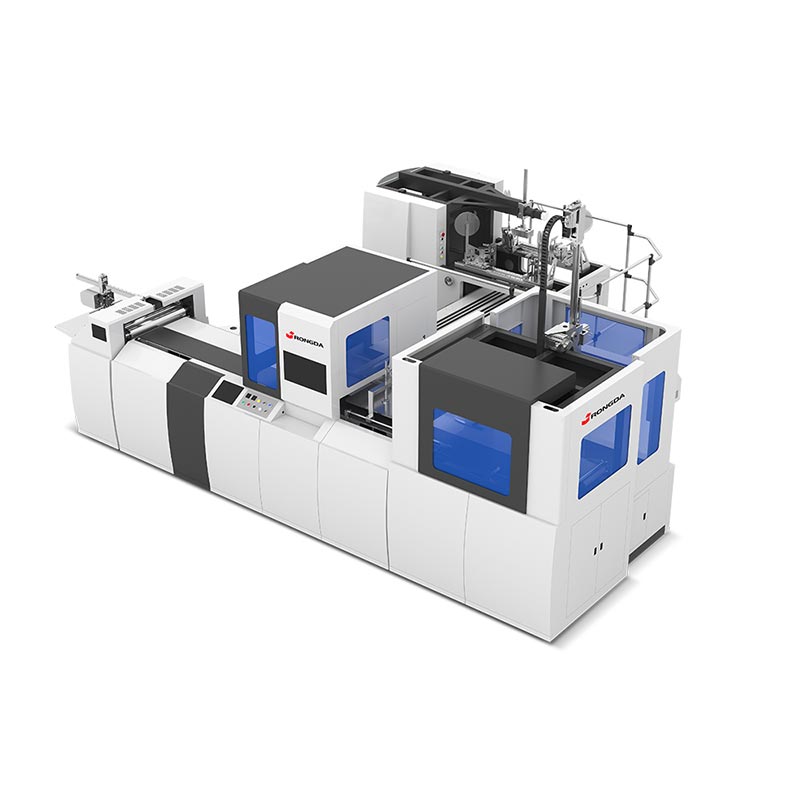
If you are looking for a reliable case maker manufacturer that provides efficient solutions for high-end book, record, gift, and creative packaging, then look no further than Rongda. Our equipment utilizes precise paper lamination, edge wrapping, corner pressing, and forming processes, resulting in high consistency and exquisite surface finish. This helps you establish a standardized, stable, and efficient cover production process. With our professional design, mature technology, and global service system, we have become a long-term partner supplier in many countries and regions worldwide, providing customized equipment solutions.
What is a Case Maker?
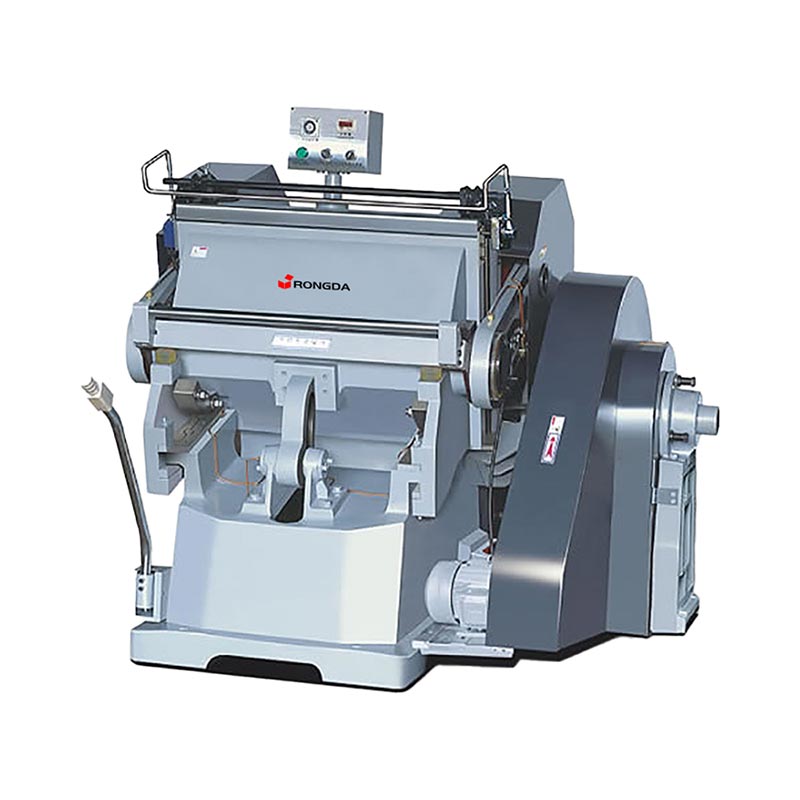
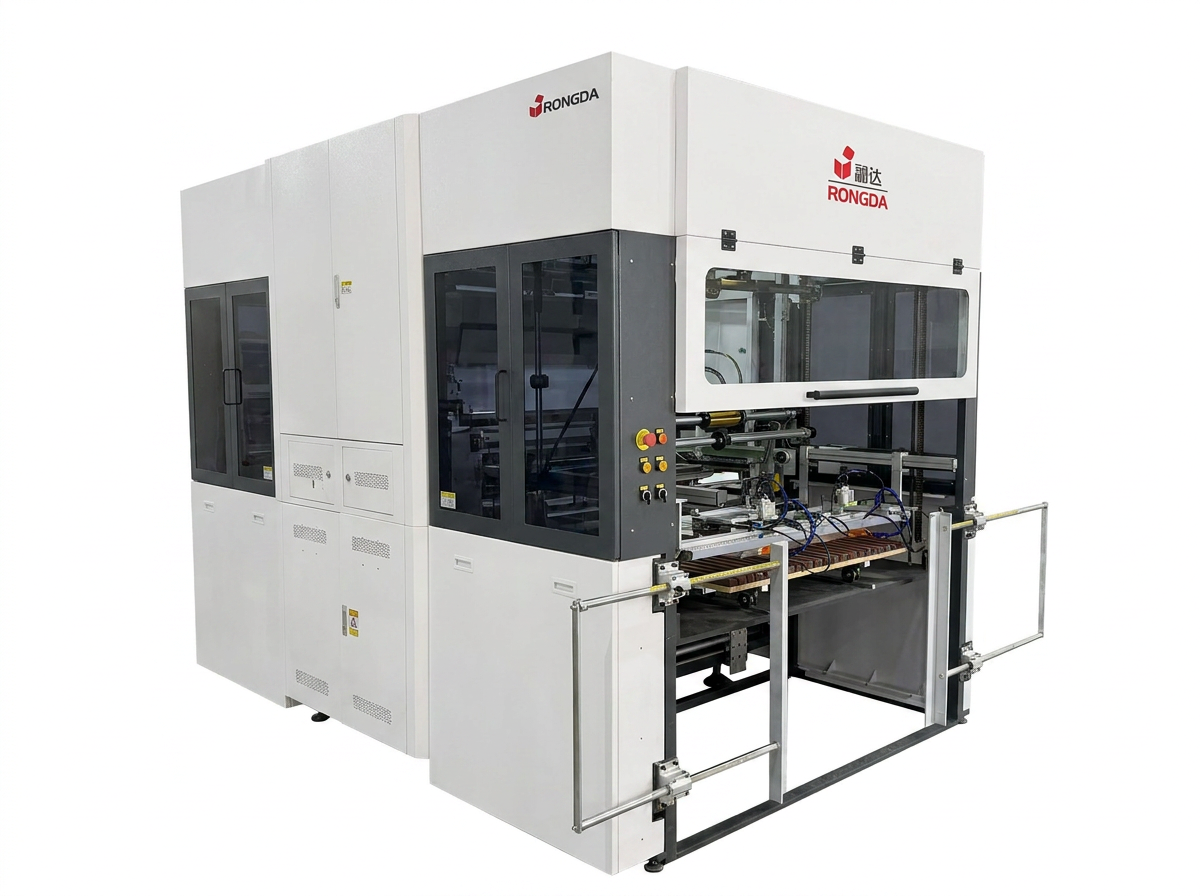
The Case Maker is a core front-end equipment in high-end rigid box and hardcover book packaging production lines, primarily used for manufacturing various cover components. It combines the cover paper with the grey board, wraps the edges, presses the corners, and performs initial shaping, producing cover components that can be directly used for the assembly of complete boxes or book covers.
Unlike our other type of equipment, the Rigid Box Making Machine, the Case Maker focuses on the precision and appearance of the cover components, ensuring a flat surface, sharp corners, and tight paper adhesion, significantly improving the yield and visual quality of the covers.

Equipment Core Value
✔ Elevate Product Quality
Case Maker, through precise paper lamination, edge wrapping, corner pressing, and initial shaping processes, produces cover components with flat surfaces, sharp edges, and tightly bonded paper.
For hardcover book covers, record sleeves, book boxes, and especially high-end gift and cultural and creative product packaging, this high-end brand visual and tactile standard is crucial, helping you increase product added value and market competitiveness.
✔ Improve Production Efficiency
Traditional cover production relies heavily on manual labor, resulting in low efficiency and susceptibility to variations in skill levels. With Case Maker, you can choose the semi-automatic or fully automatic model that best suits your needs, enabling large-scale continuous operation or flexible production, reducing reliance on skilled workers, and maintaining your factory's production rhythm.
✔ Guarantee High Yield Rate
Due to our equipment's mature process design and high-precision mechanical structure, the final products have a high yield rate. Stable operation reduces rework and paper waste, supporting you in completing large-volume orders on time.
✔ Adapt to Multi-Specification Production
Supports various gray board thicknesses and cover paper materials, adapting to the production of covers of different sizes and structures.
By adjusting tooling or parameters, you can quickly switch specifications, enabling multi-variety, small-batch orders and large-volume standardized production.

Maintenance Guide
1. Daily Cleaning
Machine surface and feeding track: Clean dust and paper scraps after each day's production to prevent accumulation from affecting feeding accuracy.
Rollers, pressure rollers, and laminating components: Regularly wipe away adhesive residue to prevent paper sticking or uneven lamination.
Electrical control panel and sensors: Gently wipe with a clean, dry cloth to prevent moisture ingress.
2. Lubrication and Maintenance
Moving parts: Apply appropriate lubricating oil to chains, gears, bearings, etc., according to usage frequency.
Corner pressing and edge wrapping devices: Check if bearings and sliding surfaces are dry; apply a small amount of high-temperature grease if necessary.
3. Inspection and Adjustment
Adhesive system: Regularly check the amount of adhesive and the cleanliness of the adhesive rollers to prevent leakage or insecure lamination.
Positioning and corner pressing devices: It is recommended to perform accuracy calibration monthly or quarterly to ensure consistent cover dimensions and precise corners.
Feeding system: Ensure that the feeding wheels and guide rails are not loose or worn to prevent paper jams or misalignment.
4. Regular Maintenance
Comprehensive inspection: As the manufacturer of the Case Maker, Rongda recommends professional maintenance every 6 months, including inspection of the electrical system, pneumatic system, transmission device, and safety devices.
Replacement of wear parts: Please replace wear parts such as adhesive rollers, rollers, belts, and sensors in a timely manner according to their wear condition.
Software/Control system: For the automated control system, system upgrades or parameter optimization can be performed.
5. Operator Training
Operators should be familiar with equipment usage specifications, start-up/shutdown procedures, emergency stop operations, and simple troubleshooting. If simple troubleshooting cannot identify the problem, please contact us immediately for relevant services.
Regular training and review should be conducted, and daily maintenance should be properly performed to reduce equipment damage caused by human error.

- View as

Automatic L-shaped Case Making Machine
AFM450B/ AFM600B Automatic L-shaped case making machine an innovative product meticulously developed to address the limitations of traditional cover machines, which can only produce covers with straight edges. It breaks through the constraints of traditional technology, achieving a breakthrough capability that directly produces double-sided, irregularly shaped covers. This brings a new solution and greater production flexibility to the industry.

Automatic Round Corner Case Maker
With the factory intelligent process design, Rongda's CM680B automatic round corner case maker provides printing companies with an innovative solution for the production of soft-spine leather covers, and also provides solid technical support for companies to develop high-value-added markets such as high-end gift boxes and hardcover books.

Semi-auto Album Cover Making Machine
Designed specifically for post-press processing, the SCM800/SCM800S Semi-auto Album Cover Making Machine is a reliable product of Rongda factory, with its superior process adaptability and efficient operation, has become an ideal solution for the large-scale production of cultural products such as hardcover book covers, folders, certificates, and high-end photo albums.

Double-station Case Making Machine
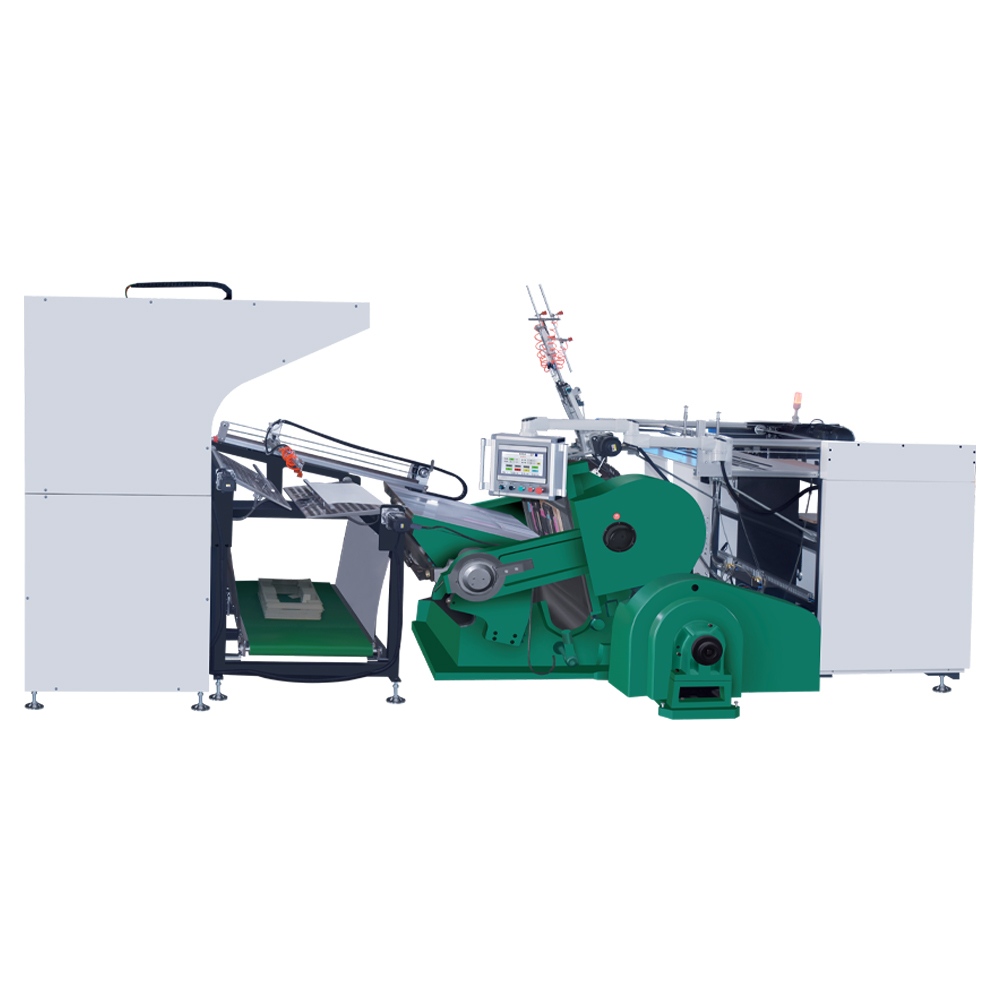
SCM900 Double-station case making machine is a semi-automatic high-performance solution designed for postpress processing, whose manufacturer and supplier is Rongda. Its core function is to provide a variety of fine cover glue and folding process. This machine is widely used for producing notebook covers, art albums, Business Folders, certificate covers and high-end hardcover books.

Digital Case Making Machine
As a reliable manufacturer in China, Rongda's SCM400B/SCM500B Digital case making machine is specially designed for hardcover production in graphic design, image processing, color card making and other industries. Its compact design saves production space, and its simple and quick debugging process makes it easy to use. The machine is ideal for graphic arts and packaging manufacturers who want to improve production efficiency and optimize product quality.

Automatic Case Cover Positioning Machine
You can rest assured to buy Rongda factory's CB500 Automatic Case Cover Positioning Machine, it is a very flexible machine that can produce both rigid boxes and hardcover by combining it with a rigid box forming Machine or an edge folding machine. This model is very suitable for small and medium-sized production, rich variety of enterprises, effectively reduce the risk of equipment investment, enhance the adaptability of the production line. For more details, please contact RONGDA machinery through the official certification channel.
As a reliable Case Maker manufacturer and supplier in China, we have our factory. If you want to buy quality and durable products, please contact us.