English
- English
- Español
- Português
- русский
- Français
- 日本語
- Deutsch
- tiếng Việt
- Italiano
- Nederlands
- ภาษาไทย
- Polski
- 한국어
- Svenska
- magyar
- Malay
- বাংলা ভাষার
- Dansk
- Suomi
- हिन्दी
- Pilipino
- Türkçe
- Gaeilge
- العربية
- Indonesia
- Norsk
- تمل
- český
- ελληνικά
- український
- Javanese
- فارسی
- தமிழ்
- తెలుగు
- नेपाली
- Burmese
- български
- ລາວ
- Latine
- Қазақша
- Euskal
- Azərbaycan
- Slovenský jazyk
- Македонски
- Lietuvos
- Eesti Keel
- Română
- Slovenski
- मराठी
- Srpski језик

How Does an Automatic Drawer Box Making Machine Improve Production?
Drawer-style packaging is one of the most persuasive forms of presentation a premium brand can use. It combines structural design with a tactile opening experience, turning an ordinary unboxing moment into something the customer remembers. Producing such boxes at a consistent standard, however, has always been difficult for converters working under the time pressure of modern packaging orders. That is precisely why the Automatic Drawer Box Making Machine has become one of the most discussed topics in post-press equipment. Automation is no longer a luxury reserved for the largest plants; it has become a practical necessity for manufacturers serving cosmetics, electronics, jewellery and gift markets.
Why Demand for Premium Drawer Boxes Keeps Rising
Several forces are pushing brands toward sliding-style packaging, and each of them places new demands on the production floor.
- Display value influences purchasing decisions. A sliding structure signals that the contents deserve closer attention. Brands exploit this psychological effect for limited editions, seasonal collections and gift sets produced on a rigid box line.
- E-commerce packaging must survive handling. Parcels pass through many stages before reaching the end recipient. A sliding structure has to hold its shape without jamming or collapsing.
- Customisation has become routine. Dimensions, wrap materials and inserts change frequently within a single production cycle, which puts pressure on traditional assembly lines.
- Labour supply keeps tightening. Manual drawer assembly is slow and depends on feel, and fewer young workers are willing to take on repetitive hand assembly roles.
Why Manual Processes Struggle in Drawer Box Manufacturing
Hand assembly depends on the operator's touch and accumulated experience. That approach works when volumes are modest. Once output climbs, weaknesses begin to show.
Consistency That Is Hard to Hold
Boxes assembled by hand rarely come out identical along every edge. The outer wrap may wrinkle, the inner tray may shift, and the drawer may not slide smoothly. Customers notice these defects immediately and read them as quality failures. Automated equipment hands the positioning and folding movements to mechanical systems, which sharply reduces variation. Even a well-adjusted die cutting station upstream cannot compensate for inconsistent hand folding downstream.
Dependence on Skilled Hands
Finding experienced assemblers is becoming harder. A newcomer needs considerable time before reaching the required level of dexterity, and when that person leaves, quality suffers right away. Automated equipment transfers that skill into the machine itself, so a new operator only needs a short introduction before running the line.
Pressure From Production Deadlines
Retail promotions and holiday windows do not wait. A manual line has limited ability to absorb an urgent order, because adding staff does not increase output in a straight line. Automated equipment runs at a steady rhythm, letting planners forecast delivery dates with far greater confidence.
Core Advantages of Modern Equipment
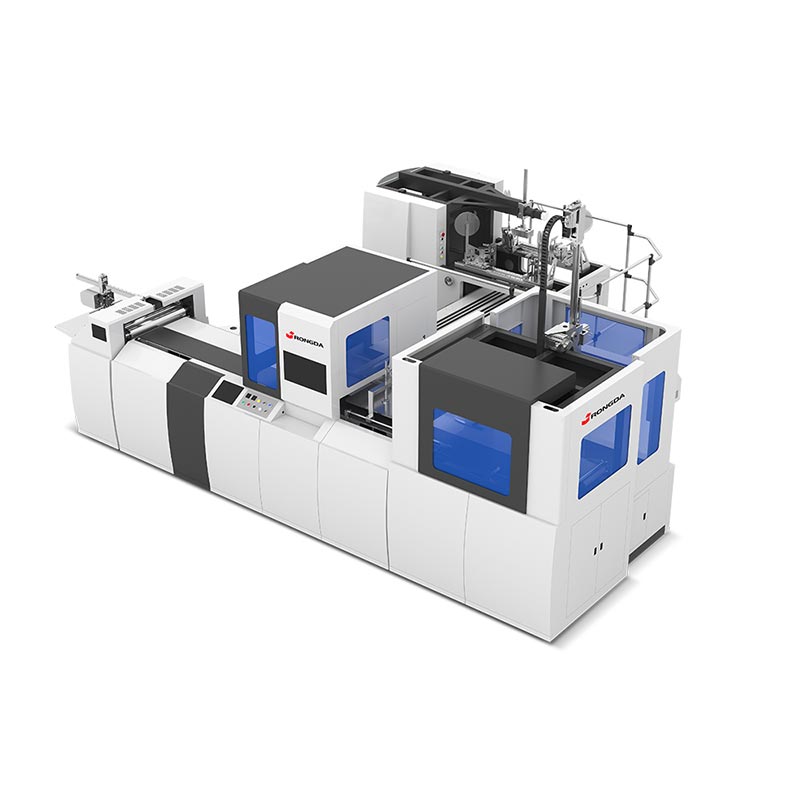
This brings us to the central question. Factories that have installed an Automatic Drawer Box Making Machine on their line report a set of interlocking benefits.
- Stable positioning accuracy. Feeding, edge folding and pressing are carried out under controlled conditions, so every drawer keeps the same clearance.
- Higher throughput. The machine runs continuously, and shift planning is no longer limited by hand fatigue.
- Lower material waste. When mis-folds and wrap errors decline, so does consumption of paper, board and covering material.
- Flexible size changes. Parameters can be stored as recipes, so switching between box styles takes minutes rather than hours.
- Predictable labour cost. A single operator can oversee several units, freeing skilled staff for inspection and logistics.
- Uniform appearance. Every drawer shows the same edge line, the same folded corner and the same wrap tension, especially when the surface has been prepared on a laminating unit beforehand.
Comparing Key Performance Dimensions
The table below sets out how manual assembly and automated production differ across the dimensions that matter most to a packaging operation.
| Dimension | Manual Assembly | Automated Equipment |
|---|---|---|
| Consistency | Depends on operator feel | Governed by machine parameters |
| Changeover | Slow, requires retraining | Recipe recall, quick switch |
| Reliance on skill | High | Low |
| Output | Limited by fatigue | Continuous and stable |
| Appearance quality | Subject to fluctuation | Repeatable and uniform |
| Scalability | Difficult | Straightforward |
Where the Equipment Fits in Real Production
Drawer boxes appear across a wide range of product categories, and each one brings its own structural preferences.
Cosmetics and Personal Care
Skincare sets and fragrance collections frequently use sliding structures because the drawer can hold several items while keeping the outer sleeve slim. Wraps are often soft-touch or textured, which makes clean edge folding especially important. A machine that handles delicate surfaces without marking them is a major advantage in this segment, and pairing it with a reliable case making system keeps the outer sleeve equally refined.
Consumer Electronics and Accessories
Small devices, cables and accessories benefit from a drawer that slides out to reveal a neatly divided tray. The tolerance requirements here are tight, because the drawer must move smoothly but without excessive play. Controlled folding and pressing are what make that possible at volume.
Gift and Promotional Packaging
Seasonal campaigns often need large quantities within a narrow window. The ability to store recipes for several box sizes and switch quickly keeps a promotional run on schedule without sacrificing finish quality. Adding hot stamping for brand marks is a natural next step for these projects.
Jewellery and Watches
These products demand a high level of refinement. The outer wrap must sit perfectly flush, corners must be crisp, and the sliding action must feel deliberate. Automated pressing and edge folding deliver that level of refinement far more reliably than hand work.
What to Examine When Evaluating Equipment
Not every machine suits every factory. The following considerations help narrow the field.
- Size range. Confirm that the working range covers both current products and the formats likely to be introduced later.
- Material handling. Test with the actual wrap stocks used in production, including textured and coated papers.
- Changeover time. Ask how parameters are stored and recalled, and how much adjustment is needed between runs.
- Glue control. Consistent adhesive application prevents both leakage and weak bonding.
- Access for maintenance. Panels and guards should allow routine service without dismantling the line.
- Support availability. Spare parts and technical guidance matter as much as the initial specification; it is worth discussing service terms via the contact page before committing.
Integrating With a Broader Post-Press Line
A drawer box is rarely produced in isolation. It depends on board that has been wrapped, die-cut, grooved and laminated. Evaluating an Automatic Drawer Box Making Machine therefore means looking at the surrounding processes as well.
- Inner trays and structural cores often come from rigid box production equipment, which sets the dimensional foundation for the whole assembly.
- The outer sleeve and cover components are prepared on a case making system, where wrap tension and corner folding are decided.
- Surface finish is applied by a laminating unit, which affects how easily the wrap can be folded without cracking.
- Accurate blank shapes depend on a die cutting solution, since any deviation there carries through to the finished drawer.
- Clean groove lines come from cardboard processing equipment, which helps the folded edges stay sharp.
- Coordinating these stages is easier when the whole line comes from one source; the team at our enquiry page can advise on configuration.
A well-matched line matters more than any single unit. When upstream and downstream equipment share the same tolerance philosophy, drawer assembly becomes predictable rather than a source of rework.
Operational Stability and Maintenance Practice
Long-term performance depends on how the equipment is treated after installation.
- Daily checks. Confirm that sensors are clean, glue nozzles are clear and air pressure sits within the recommended band.
- Wear part monitoring. Belts, pads and forming tools should be inspected on a fixed schedule so replacements happen before quality drifts.
- Parameter discipline. Operators should save settings after every successful run rather than adjusting by memory.
- Cleanliness. Adhesive residue and paper dust accumulate quickly and interfere with positioning accuracy.
- Training continuity. Written procedures keep performance steady when staff rotate between shifts; the service team can provide guidance on standard routines.
Market Trends Shaping Long-Term Value
Several currents in the packaging sector are reinforcing the case for automation.
- Shorter runs with more variety. Brands increasingly order smaller batches across more designs, which rewards fast changeover.
- Rising material costs. Waste reduction translates directly into margin protection.
- Stricter appearance standards. Retailers and marketplaces treat packaging finish as part of the product promise.
- Sustainability expectations. Efficient material use and reduced rework align with the environmental goals many brands now publish, a theme regularly covered in industry news.
- Skilled labour scarcity. Automating repetitive assembly protects output when recruitment is difficult.
Choosing a Manufacturing Partner
Equipment is only part of the equation. The supplier behind it determines how smoothly the line performs over its working life. Wenzhou Rongda Packaging Equipment Co., Ltd. operates from the Tingtian Science and Technology Innovation Park in Ruian, Wenzhou, and has built its reputation on a professional, honest and customer-focused approach since its founding. Its portfolio covers the full post-press chain, including rigid box making machinery, case making systems, cardboard cutting and grooving units, gluing and corner pasting solutions, laminating equipment and die cutting machines. A dedicated team supports every stage from the first enquiry through to after-sales service, which means a factory investing in an Automatic Drawer Box Making Machine can also source the surrounding equipment from a single, coordinated source. International customers are warmly invited to visit the facility and discuss their production requirements in person; more details are available on the company profile page.
Final Thoughts
Drawer boxes sit at the premium end of the packaging spectrum, and the standards attached to them are unlikely to relax. Brands want consistent appearance, smooth sliding action and dependable delivery, all while keeping material use under control. Automation addresses each of those expectations at once. For converters planning their next capacity investment, an Automatic Drawer Box Making Machine deserves serious consideration, particularly when it is paired with compatible upstream and downstream equipment from an experienced supplier. Rongda welcomes enquiries from packaging manufacturers around the world and is ready to help match the right configuration to the right application through the contact page.
Related News
- How Edge Gluing and Pressing Technology Is Transforming Rigid Box Manufacturing
- How Does an Edge Gluing and Pressing Machine Improve Box Making?
- Can an Integrated Case Making Machine Improve Cover Production Efficiency?
- Why Is Precise Edge Folding Essential for Premium Rigid Box Production?
- How Is a Book-Shaped Rigid Box Made? A Complete Guide to the Manufacturing Process and Automation
- Is Rigid Box Making Machine Transforming Modern Packaging Production?
Leave me a message