English
- English
- Español
- Português
- русский
- Français
- 日本語
- Deutsch
- tiếng Việt
- Italiano
- Nederlands
- ภาษาไทย
- Polski
- 한국어
- Svenska
- magyar
- Malay
- বাংলা ভাষার
- Dansk
- Suomi
- हिन्दी
- Pilipino
- Türkçe
- Gaeilge
- العربية
- Indonesia
- Norsk
- تمل
- český
- ελληνικά
- український
- Javanese
- فارسی
- தமிழ்
- తెలుగు
- नेपाली
- Burmese
- български
- ລາວ
- Latine
- Қазақша
- Euskal
- Azərbaycan
- Slovenský jazyk
- Македонски
- Lietuvos
- Eesti Keel
- Română
- Slovenski
- मराठी
- Srpski језик

What Makes a Mid-Autumn Mooncake Box Feel Truly Premium?
As the 2026 Mid-Autumn Festival approaches on September 25, mooncake gift boxes are once again appearing in shops, bakeries, and packaging production lines across China and other Asian markets.
For many people, the box is simply part of the gift. For those working in packaging, however, it tells a different story. The appearance and feel of a mooncake box often come down to a series of post-press processes, from lamination and foil stamping to die-cutting and box forming.
A small difference in finishing can change how the final package looks and feels.
A Festival Where Packaging Matters
The Mid-Autumn Festival is traditionally a time for family gatherings, mooncakes, and gift giving. Over the years, mooncake packaging has also become an important part of the experience, particularly for brands selling gift sets to businesses and consumers.
This year, the festival falls on September 25. In the weeks before the holiday, packaging producers are busy preparing boxes in different sizes, materials, and designs, often working with tight production schedules.
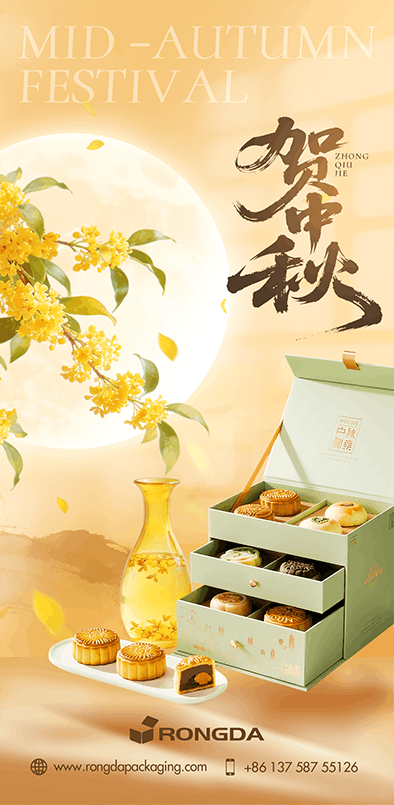
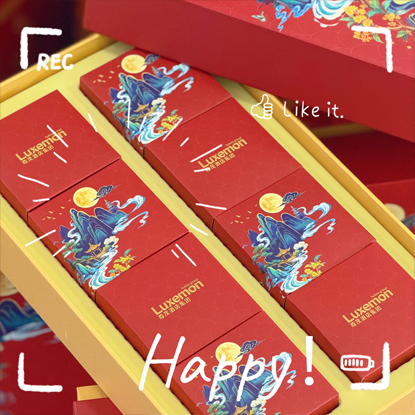
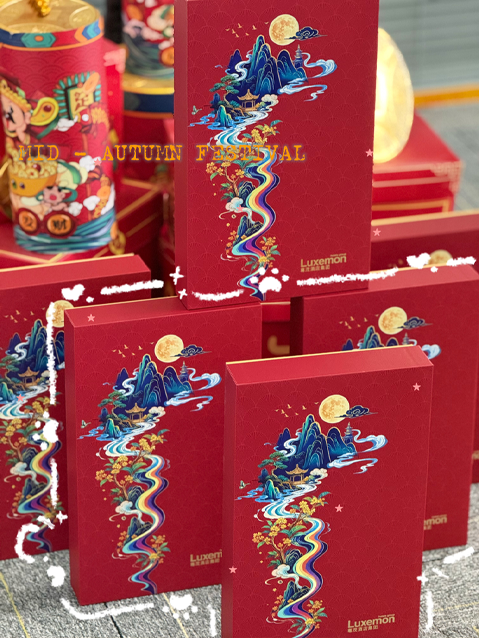
At Rongda, we recently received Mid-Autumn mooncakes from our management. The box itself caught our attention—not because it was particularly complicated, but because the finishing was well executed. The laminated surface was smooth, the foil details were clear, and the rigid box kept its shape well.
For people familiar with packaging production, these details are easy to notice. They also show how much of the final appearance depends on the post-press process.
What Goes Into a Well-Finished Mooncake Box?
A typical gift box may go through several stages before it reaches the customer. The exact process depends on the material and box structure, but some of the most common steps include lamination, foil stamping, die-cutting, creasing, gluing, and forming.
Lamination adds a protective film to the printed sheet and can also change its appearance and feel. Matte and glossy finishes are both widely used for gift packaging. One of the practical challenges is keeping the film smooth and properly aligned during production. Bubbles, wrinkles, or uneven film application can become noticeable once the finished box is assembled.
Foil stamping is often used for logos, lettering, patterns, and decorative details. Gold and silver are common choices for festive packaging, but other foil effects are also available. The result depends on factors such as temperature, pressure, material, and machine adjustment. Good registration and stable operating conditions are particularly important when the design contains small lettering or fine patterns.
Die-cutting and creasing prepare the printed sheet for the next stage of production. Accurate cutting and creasing help ensure that the pieces fit together as intended. For rigid packaging, the choice of box structure also affects the forming process. Lid-and-base boxes, book-style boxes, and other designs can require different equipment and production methods.
None of these processes works in isolation. The final appearance of a box is usually the result of several steps working together.
Why Lamination Quality Is Easy to Notice
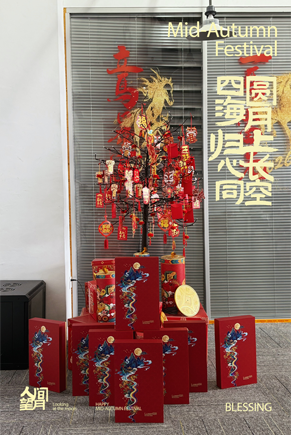
Among the different finishing processes, lamination is one of the first things people notice when they handle a box.
A smooth surface gives the packaging a clean appearance, while bubbles, wrinkles, or visible film marks can stand out under light. This is especially noticeable on large flat areas or dark-colored packaging.
Consistent lamination depends on several factors, including film quality, temperature, pressure, feeding, and machine adjustment. For higher-volume production, stable equipment can also help reduce variation between sheets.
This is one reason laminating machines remain an important part of many packaging production lines.
From Printed Sheet to Finished Box
Once the surface finishing is complete, the sheets still need to be converted into the final packaging structure.
Depending on the product, this may involve die-cutting, creasing, grooving, gluing, positioning, wrapping, and pressing. Rigid boxes in particular often require several pieces of equipment or several stages of processing.
For packaging manufacturers, the challenge is not simply producing one attractive box. The same result needs to be maintained across a production run while keeping the process practical in terms of speed, labor, material use, and setup.
This is where equipment selection becomes important.
Rongda's Role in Post-Press Packaging
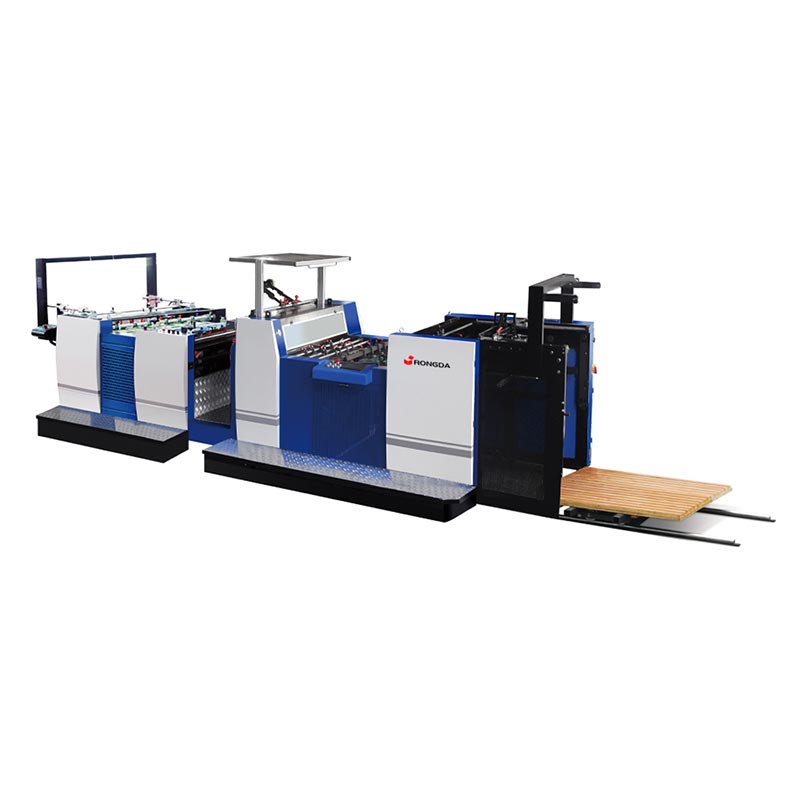
At Rongda, we focus on post-press packaging equipment covering processes such as laminating, die-cutting, grooving, gluing, positioning, box forming, and pressing.
Different packaging projects have different requirements, so there is no single machine that fits every production line. Box structure, material, size, production volume, and the required finishing all need to be considered before choosing the equipment.
For mooncake boxes and other gift packaging, these processes may be combined in different ways depending on the final design.
Rather than looking at one machine separately, we prefer to look at the complete production process and discuss where a machine can fit into the customer's existing workflow.
See Us at All in Print China 2026
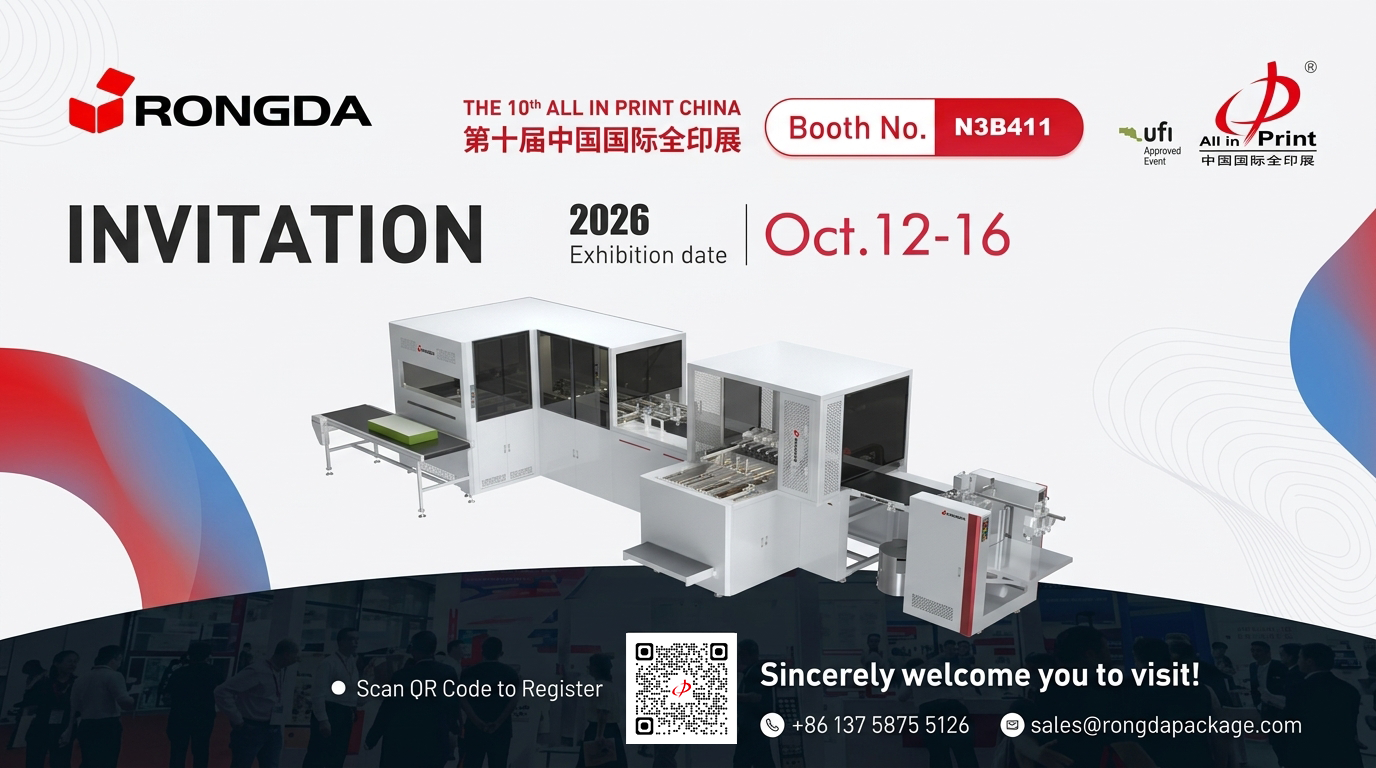
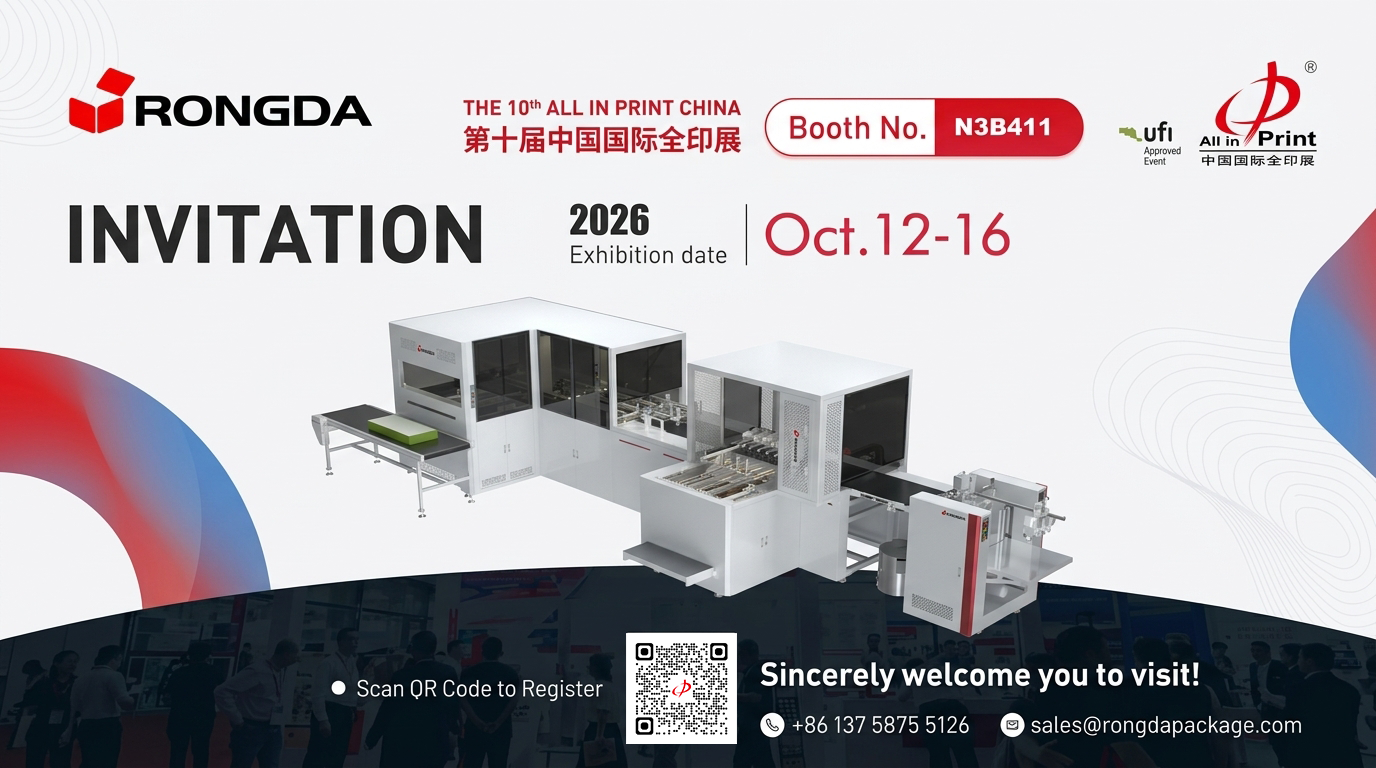
If you are interested in post-press equipment and packaging production, we will be exhibiting at All in Print China 2026 in Shanghai this October.
Date: October 12–16, 2026
Booth: N3B411
Venue: Shanghai New International Expo Centre (SNIEC), Shanghai, China
We will bring our latest equipment and solutions for post-press packaging production to the exhibition. Visitors are welcome to stop by our booth, take a closer look at the machines, and talk with our team about their own production requirements.
Whether you work with mooncake boxes, gift packaging, rigid boxes, or other paper-based packaging, we would be happy to discuss your application and see what kind of equipment may fit your process.
The Mid-Autumn Festival is a good reminder that packaging is not only about appearance. The materials, finishing processes, and production methods behind the box all contribute to the final result.
If you are visiting All in Print China 2026, we look forward to meeting you at Booth N3B411 in Shanghai.
Related News
- China’s National Day Holiday and Our October Schedule
- Can Rongda’s ZH400 Help Simplify Multi-Box Production?
- After PLASTPERU & PACKPERU 2026: A Closer Look at Our Time in Peru
- After PLASTPERU & PACKPERU 2026: A Few Days to Explore Peru
- Meeting Customers Before the Show: Rongda at PLASTPERU & PACKPERU 2026
- How Are Local Visits Strengthening Post-Press Packaging Partnerships?
Leave me a message